As fly fishermen along the Atlantic coast prepare for the spring migration, the regulatory picture for 2026 is now settled—and largely unchanged. The Atlantic States Marine Fisheries Commission’s Striped Bass Management Board voted in late October 2025 to maintain current management measures, rejecting a proposed 12 percent coastwide harvest reduction. The decision was reaffirmed at the ASMFC Winter Meeting in Arlington, Virginia, held February 3–5, where the Board turned its attention to the deeper crisis lurking beneath the status quo: a catastrophic and sustained failure of striped bass recruitment.
For anglers gearing up this spring, the practical news is straightforward. The ocean slot limit of 28 to 31 inches and the one-fish bag limit remain in effect. No new seasonal closures have been imposed. The Board’s rationale hinged on preliminary 2025 catch data suggesting that recreational mortality came in lower than projected, and on the historically low fishing mortality rate recorded in 2024—factors that, taken together, gave managers enough cover to avoid the economic pain that a 12 percent reduction would have inflicted on coastal communities and the charter industry.
But the regulations tell only part of the story. Beneath the unchanged bag limits, the striped bass population is heading somewhere no one wants it to go.
Seven Years and Counting
The bigger news from the Winter Meeting was the formal establishment of a Work Group charged with confronting a generational crisis in striped bass reproduction. The 2025 Young-of-Year survey conducted by the Maryland Department of Natural Resources recorded an index of 4.0 in the Chesapeake Bay—a slight improvement over 2024’s dismal 2.0, but still far below the long-term average of 11. It marked the seventh consecutive year of below-average spawning success in the Bay, the primary nursery for the entire coastal migratory stock.
The news from the Hudson River, the second most important spawning ground, was no better. New York’s Department of Environmental Conservation confirmed poor reproductive success for the third straight year, a finding that prompted the state’s representatives to introduce the motion creating the Work Group in the first place. “For the third straight year, DEC’s annual juvenile striped bass survey in the Hudson River documented poor striped bass reproduction, heightening concerns about future abundance and long-term management implications,” the agency said in a February 2026 statement.
The Virginia Institute of Marine Science reported a 2025 index of 5.12 fish per seine haul—modestly above the previous year’s 3.43, but still below the historic average of 7.77. Across the board, the story is the same: the pipeline of young fish entering the population has been running close to empty for the better part of a decade.
The Arithmetic of Decline
The basic biology is unforgiving. A striped bass needs roughly six years to reach reproductive maturity. Seven consecutive years of recruitment failure means the population is now well into a second generation without producing a single strong year class. The robust 2015 year class—the last truly prolific cohort—has been providing the excellent fishing for large, migratory bass that many anglers have enjoyed in recent seasons. The 2017 and 2018 year classes were roughly average. After that, essentially nothing.
The current slot limit of 28 to 31 inches targets fish from those strong year classes—the very fish most critical to future spawning success. Every bass harvested or killed through catch-and-release mortality is one fewer potential spawner contributing to the depleted spawning stock biomass.
Maryland DNR Director of Fishing and Boating Services Lynn Fegley acknowledged the tension in the agency’s October statement accompanying the survey results: “Management actions taken over the last decade have resulted in a healthy population of spawning-age striped bass. However, continued low numbers of striped bass entering the population is a threat to this progress as there are fewer juveniles growing into spawning adults.”
A Fishery Divided
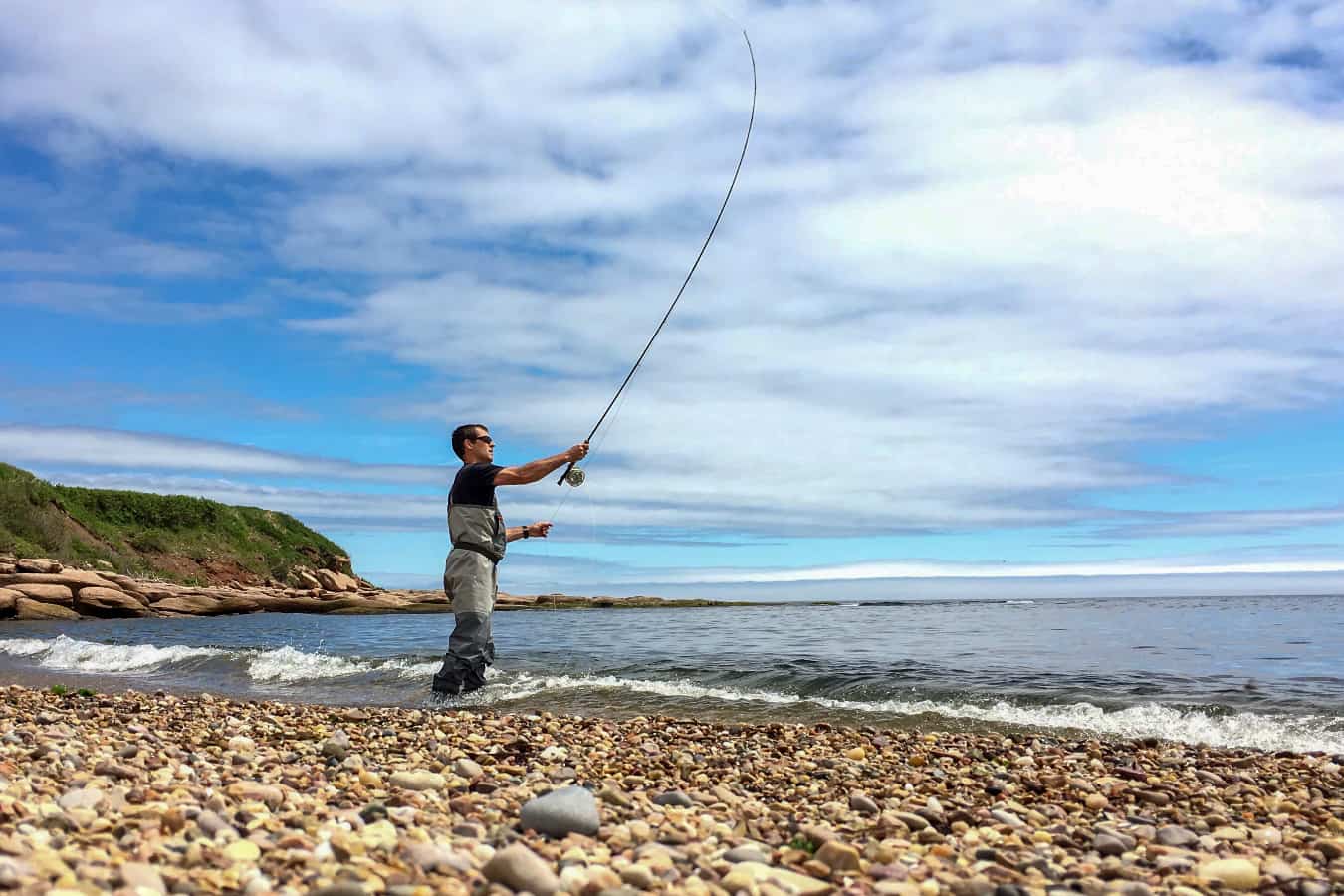
The 2026 season will be two fisheries in one. The spring migration will bring large, powerful striped bass to familiar haunts from the Chesapeake to New England, and the fishing for trophy-class fish may once again be very good. The big bass from the 2015 year class are in their prime. Anglers throwing large Deceivers and weighted Clousers to feeding fish on the flats, in the rips, and along the beachfronts will find willing targets.
What they will also notice—what many have already been noticing—is that the smaller fish are gone. The schoolies that once provided high-volume action on light fly tackle, the 16- to 24-inch fish that filled the estuaries and back bays, are simply absent in the numbers they once were. That empty water is the recruitment collapse made visible, and it will only grow more pronounced as the aging remnants of the older year classes thin out.
Conservation Groups Sound the Alarm
The American Saltwater Guides Association has been among the most vocal critics of the decision. The organization, which represents fly fishing and light-tackle guides along the coast, called the status quo a gamble with the fishery’s future. ASGA has pressed for meaningful harvest reductions while firmly opposing no-targeting closures as unenforceable and punitive. Its central argument is simple: keep as many fish in the water as possible through tighter harvest rules.
The Chesapeake Bay Foundation echoed those concerns, noting that the Board’s decision effectively concedes that the stock will not rebuild to its target level by the 2029 deadline established under Amendment 7. Only five of sixteen voting states—Maine, Massachusetts, Rhode Island, Connecticut, and North Carolina—supported the 12 percent reduction. The remaining states sided with economic concerns—a political dynamic that will look familiar to anyone who remembers the run-up to the stock’s near-collapse in the 1980s.
Stripers Forever, another advocacy organization, went further, calling explicitly for a coastwide harvest moratorium—the same tool that rescued the fishery four decades ago. “Striped bass are officially in a death spiral,” the group wrote following the 2025 survey results. “The deck is stacked against the species.”
What Comes Next
The Work Group is, at bottom, an admission that the current management framework cannot handle what lies ahead. Its mandate is to prepare fisheries managers for a period in the early 2030s when the coastal population is expected to be substantially smaller, as the weak year classes from 2019 through 2025 mature—or fail to—and the dominant cohorts age out. The group will consider updates to the management plan’s goals, objectives, and tools, potentially including drastic measures such as no-targeting closures and harvest moratoria.
A full benchmark stock assessment is scheduled for 2027, and its results will inform management decisions beginning in 2028. The Work Group’s initial organizational meeting took place on February 5 at the Winter Meeting, where the Board provided guidance on its composition, timeline, and specific tasks. The assessment will also revisit the biological reference points underpinning the rebuilding plan. Some observers expect it will result in a downward revision of the spawning stock biomass target—redefining success rather than achieving it.
Meanwhile, the ASMFC’s Atlantic Menhaden Board voted at its October 2025 meeting to reduce the 2026 menhaden total allowable catch by 20 percent, to roughly 185,000 metric tons. Menhaden are a critical forage species for striped bass, and ecosystem reference points developed through the ASMFC’s modeling framework use striped bass as the focal predator species. Whether that reduction will meaningfully aid striped bass recovery is anybody’s guess, but it is at least a gesture toward the ecosystem-based management that advocates have been demanding.
The Season Ahead
For now, the regulations are what they are. Fly fishermen heading to the surf, the flats, or the estuaries this spring will fish under the same rules as last year. The big bass will be there. How much longer is the question the Work Group exists to answer.
Striped bass management has always followed the same script: delay, then crisis, then the one measure that has ever actually worked—a moratorium. Whether today’s managers will act before repeating the cycle is the question that will shadow every striper season for years to come.
Sources: Atlantic States Marine Fisheries Commission meeting summaries and press releases (2025–2026); Maryland Department of Natural Resources 2025 Chesapeake Bay Young-of-Year Striped Bass Survey; New York State Department of Environmental Conservation, February 2026; Virginia Institute of Marine Science 2025 Juvenile Striped Bass Seine Survey; Chesapeake Bay Foundation; American Saltwater Guides Association; Stripers Forever.
Trending Products