
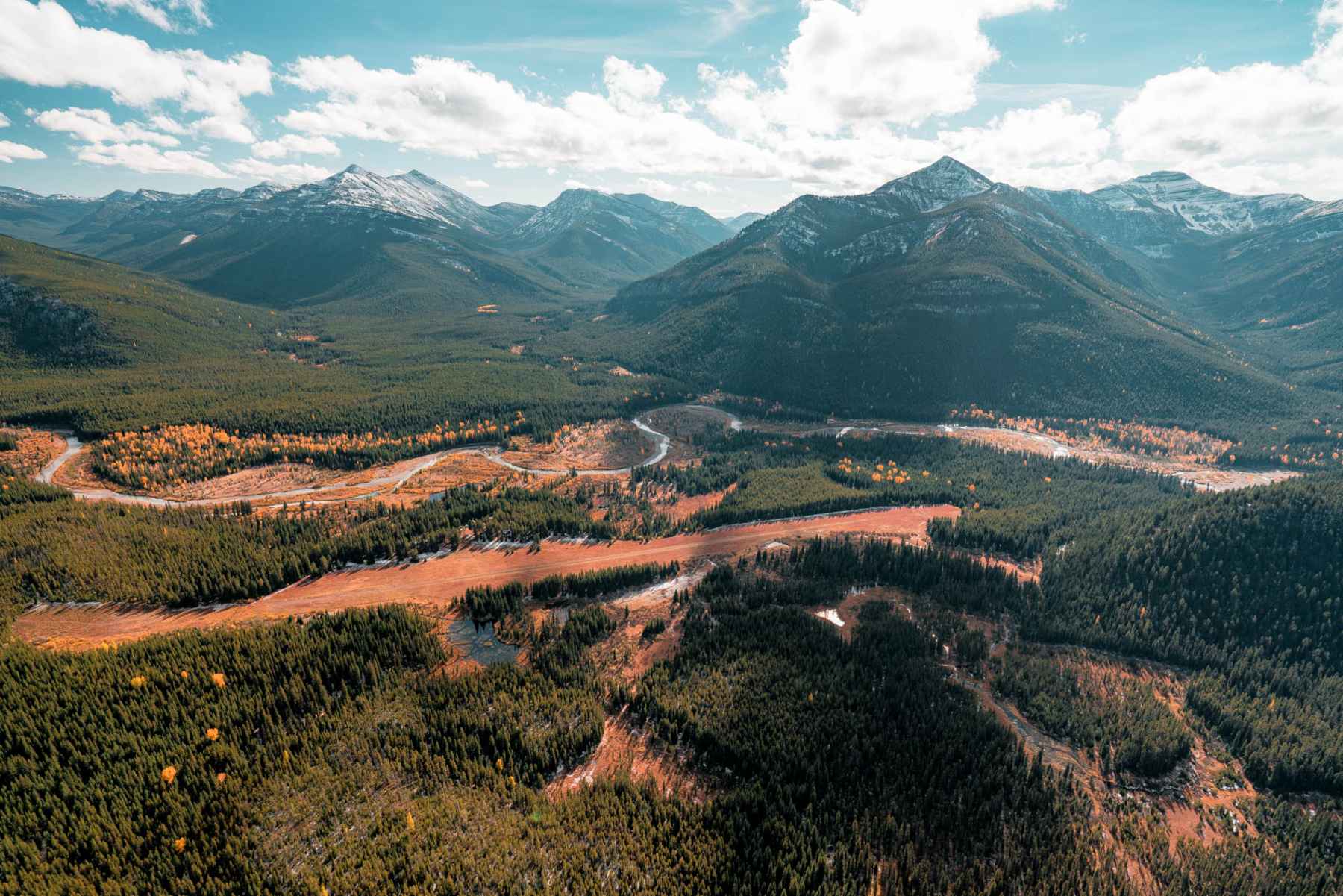
Ninety percent of wildfires start within a half mile of a road. The Trump administration wants to build more of them.
In a press release issued yesterday, the USDA proudly announced its decision to rescind the Roadless Rule in its entirety. The release was rife with warnings about wildfire risks, emergencies, and an industry favorite term for aggressive logging: active forest management. It included praise from Republican western governors like Utah’s Spencer Cox, a leading figure in the fight to sell off Americans public lands. Deputy Secretary of Agriculture Stephen Vaden explained that the first step to managing forests is having access to them. Forest Service Chief Tom Schultz, a former logging executive, insisted that active management isn’t optional, it’s essential.
What doesn’t appear in the press release is a single mention of the drinking water, wildlife, or old growth forests that depend on roadless areas. There’s also no explanation of what an inventoried roadless area is or why they were protected to begin with. It’s a document ostensibly about a fire emergency that ends with 44 million acres of national forest opened to logging and road building.
Roads Are How Fire Starts
Inventoried roadless areas make up about 28 percent of Forest Service land and account for three percent of the wildfires that start on it. Ninety percent of the wildfires that start in this country start within a half mile of a road. It’s not hard to understand why. Roads deliver people, people start fires. And not just from insufficiently drowned campfires. It’s things like dragging trailer chains, catalytic converters on dry grass, cigarettes, and all kinds of other ways. Roads also tend to bring invasive dry grasses that carry flames into stands that otherwise would’ve been resilient.
The Forest Service knows this. It’s their own finding. When they wrote the rule, the agency concluded that building roads into inventoried roadless areas “would likely increase the chance of human-caused fires due to the increased presence of people,” and that keeping roads out “would not cause an increase in the number of acres burned by wildland fires or in the number of large fires.”
The link between roads and wildfire ignition is obvious and peer-reviewed. Just this summer Biological Conservation published research that found inventoried roadless areas hold the highest integrity forest ecosystems in the United States while carrying lower wildfire ignition density than roaded forests. The paper takes the USDA’s stated rationale for the rescission and turns it inside out using the government’s own data.
They Can’t Maintain the Roads They Have
A century of industrial logging left more than 386,000 miles of road on our national forests. That’s enough to circle the earth fifteen times and is the largest road network managed by any single government entity on the planet.
The 2001 Roadless Rule was actually a budgetary decision more than anything. Mike Dombeck, Forest Service Chief at the time, has said as much. Three years before the rule, the agency’s engineering staff noted that the critical reconstruction bill on the road system was more than $10.5 billion. Road maintenance funding that year was $85 million. The agency couldn’t afford to maintain what it had, taking the remaining roadless areas off the table was an obvious cost saving measure.
Twenty-five years later none of it’s been fixed. The agency now files a deferred maintenance report with Congress every quarter. The last one puts the roads and bridges backlog at $7 billion. And that only covers roads suitable for passenger cars. High clearance and closed roads “cannot be estimated with a suitable degree of confidence and are therefore not included.”
When a forest road deteriorates past the point where a passenger car can drive it, it not longer adds to the backlog and drops off the count instead. The Forest Service maintained about 86,000 miles to passenger-car standard in the late nineties. Today it’s roughly 65,000. Twenty thousand miles of road got dropped off the tally.
They Can’t Treat The Land They Already Have Access To
Schultz says in this morning’s release that only five percent of high hazard roadless country has received fuels treatment since 2014. He offers that number as proof that the Roadless Rule is what’s stopping them. Only two sentences later he tells you that 11.3 million acres of roadless area (more than a fourth of all roadless areas) already sit beside existing roads.
If access were the problem, those 11.3 million acres would be treated. But they aren’t.
Grassroots Wildland Firefighters found the Forest Service completed 38 percent less wildfire mitigation work in its first year under this administration than it had averaged over the four years before. Why?
They Broke the Agency
Under this administration the Forest Service has lost nearly a fifth of its workforce through mass firings, buyouts, and deferred resignations. In late March, they decided the carnage wasn’t enough and announced a reorganization that amounts to a near total dismantling of the agency Theodore Roosevelt and Gifford Pinchot built to manage the nation’s forests.
Every budget request OMB Director Russell Vought has sent to Congress has tried to slash the agency’s already woefully inadequate budget only to be rebuffed by Congress. Last year’s asked to cut $1.4 billion, or nearly a fourth of the agency’s budget, and this year the administration asked Congress to shut down the research arm altogether while increasing the money for selling timber.
The Real Reason is in Plain Sight
Usually agencies keep the stated justification and the actual one in separate documents, but the USDA decided to print them both in the same press release.
Ten paragraphs in, after talking about wildfire emergencies, they list the executive orders this rescission carries out. Executive Order 14192, Unleashing Prosperity Through Deregulation. Executive Order 14225, Immediate Expansion of American Timber Production. Executive Order 14154, Unleashing American Energy. Executive Order 14153, Unleashing Alaska’s Extraordinary Resource Potential.
Deregulation, timber, energy, Alaskan extraction. No mention of wildfire.
What You Can Do
Public comments open on August 20th and run through September 21st. We partnered with Sierra Club to build an interactive map of all 2,901 inventoried roadless areas. The map shows you what this does to the ones near you, and walks you through drafting a comment that cites the science and names the legal defects. It takes a few minutes.
Arm yourself with information. This will be a defining fight in the Trump administration’s war on public lands. The public comment period is your opportunity to go on the record in opposition to this. It’s also your opportunity to give the environmental lawyers that will fight this in the courts something to work with. No one can afford to sit this out. Too much is on the line.
Trending Products